Korea Transportation Guide: Subway, KTX & T-Money Card Explained
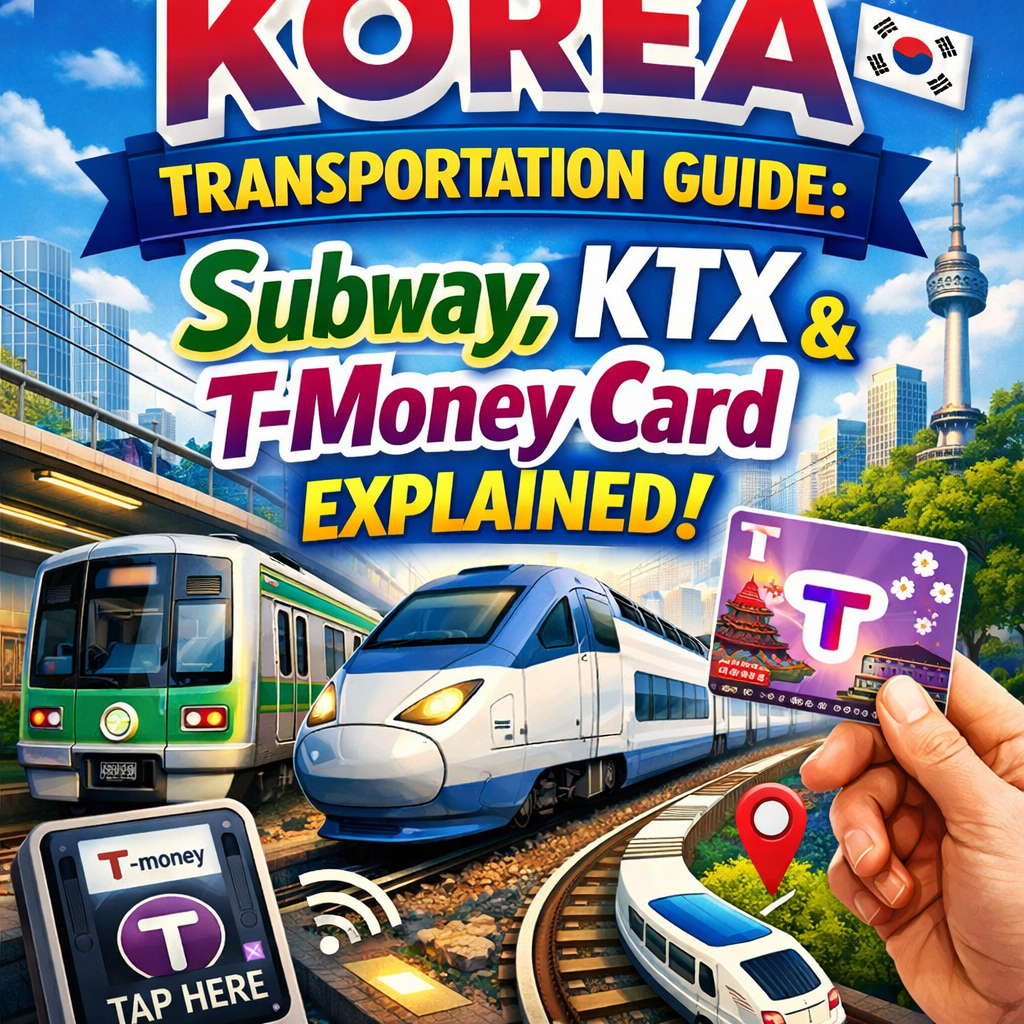
Korea Transportation Guide: Subway, KTX & T-Money Card Explained
If you are planning a trip to Korea, the fastest way to get around Seoul and other major cities is by using the subway, KTX, and the T-Money card. This Korea Transportation Guide: Subway, KTX & T-Money Card Explained gives you the basics, estimated costs, and practical tips so you can travel smoothly from the moment you land.
For most Singapore travellers, the easiest setup is simple: use the subway for city travel, KTX for long-distance trips, and a T-Money card for convenient tap-and-go payments. If you are also planning a Korea itinerary with ferry schedule ideas, travel packages, visa info, and other travel tips, this guide will help you organise everything clearly.
Why this Korea Transportation Guide: Subway, KTX & T-Money Card Explained matters
Korea is very easy to explore once you understand its transport system. The signs are clear, the trains are frequent, and the payment system is traveller-friendly. You do not need to rely on taxis for every trip.
- Subway is best for city sightseeing.
- KTX is best for fast intercity travel.
- T-Money card is best for simple payments on public transport and in many convenience stores.
How the Korea subway works
The subway is the most useful transport option in cities like Seoul, Busan, and Daegu. It is clean, frequent, and usually cheaper than taxis for short to medium distances.
What you need to know before riding
- Check the line colour and line number before entering the platform.
- Look for station exits, because large stations may have many exits.
- Peak hours can be crowded, especially in Seoul.
- Most station signs have English, Korean, and often Chinese and Japanese.
Estimated subway cost
- Typical adult base fare: around KRW 1,400 to KRW 1,500 for short rides.
- Longer trips cost more depending on distance.
- Using a transport card is usually more convenient than buying single tickets every time.
Best subway travel tips
- Download a map app before your trip.
- Keep your card topped up so you do not need to queue.
- Stand on the correct side if the station uses platform doors and line direction indicators.
- Bring a light jacket in winter, because underground and train carriages can feel warm.
How to use the KTX in Korea
KTX is Korea’s high-speed rail system. It is the best choice if you want to travel between major cities quickly, such as Seoul to Busan, Seoul to Daegu, or Seoul to Gwangju.
When to choose KTX
- You want to save time on long-distance routes.
- You are travelling with family and prefer a smoother ride.
- You want to avoid domestic flights for medium-distance trips.
Estimated KTX travel times
- Seoul to Busan: about 2.5 to 3 hours.
- Seoul to Daegu: about 1.5 to 2 hours.
- Seoul to Daejeon: about 1 hour.
Estimated KTX costs
- Prices vary by route, class, and booking time.
- For many popular routes, expect roughly KRW 30,000 to KRW 60,000+.
- Booking earlier can help you get better seat availability.
Simple KTX booking tips
- Book ahead during weekends, public holidays, and school holiday periods.
- Choose seat reservations if you travel with luggage.
- Arrive early so you have time to find the platform and carriage.
- Keep your ticket or QR code ready for inspection.
What is the T-Money card?
The T-Money card is a rechargeable transport card used widely in Korea. It helps you tap in and tap out on subway systems and many buses, and it can also be used at many convenience stores and vending machines.
Why travellers love T-Money
- No need to buy a new ticket for every journey.
- Easy to top up at stations and convenience stores.
- Works well for both short city trips and multi-day itineraries.
- Useful for travellers who want fast, contactless payments.
How to use T-Money step by step
- Buy a T-Money card at an airport, convenience store, or station.
- Top up the card with cash or at a recharge machine.
- Tap the card when entering the subway or bus.
- Tap out when required.
- Reload the card when the balance gets low.
Estimated T-Money starting cost
- Card purchase fee: usually low and affordable.
- Top-up amount: choose based on your trip length, often KRW 10,000 to KRW 50,000 or more.
Subway vs KTX vs taxi: which is best?
| Transport | Best for | Pros | Cons |
|---|---|---|---|
| Subway | City travel | Cheap, frequent, easy to use | Can be crowded at peak hours |
| KTX | Intercity trips | Fast, comfortable, efficient | More expensive than local trains |
| Taxi | Late-night or direct travel | Convenient door-to-door service | Higher cost, traffic delays |
Practical Korea travel tips for Singapore travellers
- Prepare a small amount of cash for top-ups and small purchases.
- Use a transport card from day one to save time.
- If you are visiting multiple cities, combine KTX with local subway rides.
- Travel light if you plan to use the subway often, especially during rush hour.
- Check visa info before booking flights, hotel stays, or rail passes.
Suggested Korea itinerary using subway and KTX
3-day Seoul city break
- Day 1: Airport arrival, hotel check-in, Myeongdong, and night shopping by subway.
- Day 2: Gyeongbokgung, Bukchon, Insadong, and Hongdae.
- Day 3: Morning cafe hop, local market visit, and airport transfer.
5-day Seoul and Busan trip
- Days 1–2: Seoul sightseeing by subway.
- Day 3: Take KTX to Busan.
- Days 4–5: Explore Busan markets, beaches, and cafes using the subway and local buses.
Estimated daily transport budget
- City-only traveller: around KRW 5,000 to KRW 15,000 per day.
- Mixed city and intercity traveller: around KRW 20,000 to KRW 60,000+ per day depending on KTX use.
- Family or group trips: budget more for comfort, luggage, and occasional taxis.
Common mistakes to avoid
- Forgetting to tap out on the subway.
- Not checking the correct station exit before leaving the station.
- Buying KTX tickets too late during busy travel periods.
- Assuming every place accepts foreign cards for transit top-ups.
- Planning too many long transfers in one day.
FAQs about Korea transportation
Do I need a T-Money card in Korea?
It is not always required, but it makes subway and bus travel much easier. For most travellers, it is one of the most useful things to buy on arrival.
Can I use the subway for airport transfers?
Yes, in many cases you can use airport rail and subway connections to reach central Seoul and other city areas, depending on your arrival airport and destination.
Is KTX better than flying within Korea?
For many routes, KTX is more convenient because it avoids airport transfer time, security queues, and extra waiting.
Are there ferry schedule options in Korea?
Yes, ferry routes are available for some coastal and island destinations. If your itinerary includes islands or coastal towns, check the latest ferry schedule before you go.
Do I need travel packages for Korea?
Travel packages can be useful if you want a simpler planning process, especially for first-time visitors, families, or travellers who prefer bundled hotel and transfer options.
Do I need visa info before I travel?
Yes. Always confirm visa info before booking, because entry rules can change based on nationality, purpose of travel, and trip duration.
Useful travel links and related reading
If you enjoy planning easy short trips, you may also like these related guides:
- How to Travel from Singapore to Batam (FAQ)
- Batam Ferry Guide: Everything You Need to Know Before You Go
- Complete Bintan Island Travel Guide for First-Time Visitors: Ferries, Visa Info, Costs & Best Itineraries
- Where to Go This Weekend from Singapore: 10 Options for 2025
Plan your next trip with easy transport
Once you understand subway, KTX, and T-Money, Korea becomes much easier to enjoy. You can move around confidently, save money, and focus on food, shopping, culture, and sightseeing instead of transport stress.
For more travel inspiration, you can also explore visa-free weekend destinations from Singapore, compare Batam vs Bintan, or browse more budget-friendly short trips.
👉 Check our latest Korea packages and WhatsApp us to book now.


